Age-Related Hearing Loss (Presbycusis)
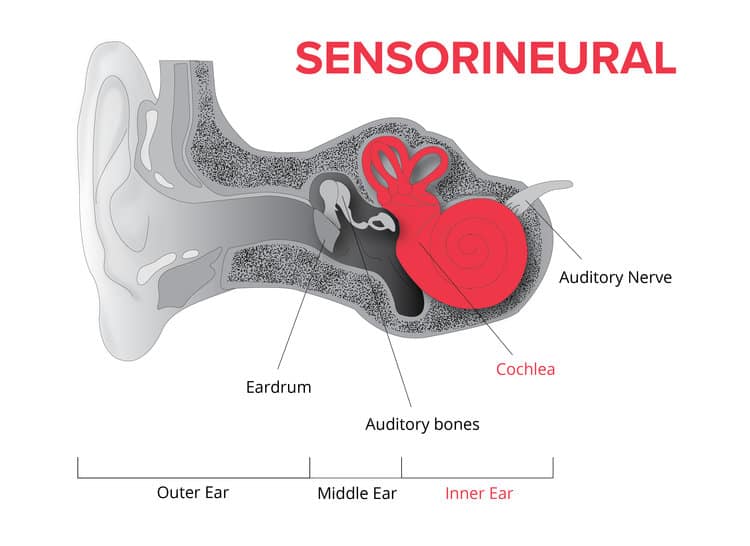
As people age, the hair cells in the cochlea and other structures in the inner ear deteriorate, reducing the ability to hear high frequencies and understand speech, especially in noisy environments.
Noise-Induced Hearing Loss
Prolonged exposure to loud sounds can damage the hair cells in the cochlea, leading to permanent hearing damage. These hair cells do not regenerate.
Genetic Factors (Inherited Hearing Loss)
Genetic mutations can affect the development of the auditory system, causing hearing loss either at birth or progressively over time.
Ear Infections and Blockages
Infections or blockages, such as fluid buildup in the middle ear or earwax buildup, prevent sound from reaching the inner ear, leading to conductive hearing loss.
Ototoxic Medications
Certain medications, such as antibiotics, chemotherapy drugs, and high doses of aspirin, can damage the inner ear or auditory nerve, leading to temporary or permanent hearing loss.
Trauma or Injury
Physical injuries to the ear, head, or neck can damage the eardrum, ossicles, cochlea, or auditory nerve, affecting the transmission and processing of sound.
Tumors
Benign tumors on the vestibulocochlear nerve can compress the nerve, impairing its function and leading to gradual hearing loss. Tumors can also affect balance.
Meniere’s Disease
Fluid buildup in the inner ear increases pressure, disrupting the cochlea’s ability to process sound and affecting the vestibular system, causing balance issues, vertigo, and tinnitus.
Chronic Health Conditions
Conditions such as diabetes, high blood pressure, and autoimmune diseases can affect blood flow to the inner ear, leading to damage of the cochlea or auditory nerve over time.
Eustachian Tube Dysfunction
A blocked Eustachian tube prevents proper pressure equalization in the middle ear, causing fluid buildup and temporary conductive hearing loss.
Stroke or Neurological Disorders
Strokes or neurological conditions can damage brain areas responsible for processing sound, resulting in central hearing loss, even when the ear functions normally.
These causes affect different parts of the auditory system, leading to varying types of hearing impairment. Identifying the cause is key to finding the right treatment.